Understand the connections. Support easier movement.
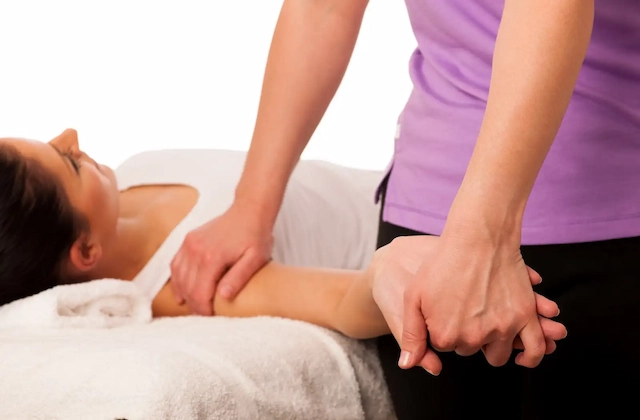
Manual therapy is a physiotherapy treatment in which we specifically examine joints and muscles and treat them with our hands. Through adapted movements and hands-on techniques, we aim to relieve pain and make restricted movements easier.[1]
It can be part of treatment for certain back, neck or joint problems, for example. Whether it suits your needs depends on your symptoms and the examination findings. We also consider which movements and activities matter to you in everyday life.[3, 6, 7]
Understand what limits you.
We begin with a discussion about your symptoms and a physical examination. We look at which movements you find difficult and how your symptoms change during them. Together, we set goals for treatment.[2]
Targeted hands-on treatment.
Depending on the findings, we use joint mobilisations and techniques for the muscles. For example, we may move a joint with our hands. We adapt the choice and intensity to your situation. As treatment progresses, we review how you respond to these measures.[1, 2]
Support movement in everyday life.
Suitable exercises and clear advice complement treatment. They aim to help you improve your mobility and capacity between appointments, too. We discuss together which exercises are useful and how often to do them.[3, 6]
Sources & clinical background
The sources distinguish between the German manual therapy service category and the specific manual techniques studied. The results relate to particular conditions and comparison treatments.
- G-BA: Remedies Directive (2025 version). Section 19, number 7 describes manual therapy as including targeted mobilisation without thrusts and soft-tissue techniques. Defines a service; does not independently demonstrate effectiveness.
- GKV-Spitzenverband: physiotherapy service specification. Annex 1, item X1201: assessment, an individual treatment plan, and manual and active measures. Intensity is adapted to the patient’s response.
- DEGAM: S3 guideline on non-specific neck pain (2025). Mobilisation/manipulation may be offered; staying active and moving are central. The recommendation applies to non-specific neck pain.
- Cochrane: manual therapy with exercise for neck pain (2025). Possible improvement in function; results for pain differ when compared with sham treatment and no treatment. Limited certainty of evidence, mainly for chronic symptoms.
- Cochrane: spinal manual techniques for chronic low back pain (2026). Compared with other conservative treatments, little to no short-term difference in pain and a small benefit in function. Examines mobilisation and manipulation; low to very low certainty of evidence.
- WHO: guideline on chronic primary low back pain (2023). Manual techniques are a possible addition to individually tailored care involving information and movement. Conditional recommendation based on very low certainty of evidence.
- NICE NG226: hip and knee osteoarthritis (2022). Manual therapy may complement therapeutic exercise. Evidence is insufficient to support its use as a standalone treatment.
- GKV-Spitzenverband: Annex 7 – further training (version of 13 April 2026). Section III.3 describes manual therapy training with at least 260 teaching units of 45 minutes, practical and theoretical content and a final examination. Documents the general requirements for this additional qualification.
Thoroughly trained. Personally supported.
For your manual therapy, we combine thorough further training with scientific knowledge and experience in physiotherapy practice. We keep your personal situation and goals in view.
Extensive manual therapy training.
Our manual therapy treatment builds on extensive further training. It deepens the knowledge of how to assess movement problems and treat them with targeted hands-on techniques and suitable exercises.
Knowledge and experience.
We combine current professional knowledge with practical experience. We tailor treatment to your symptoms, your needs and the goals that matter to you in everyday life.
Experience in clinical practice and sport.
Our team brings together experience in orthopaedics, surgery and sports therapy. This helps us understand different symptoms and demands, both in everyday life and when returning to sport.