When your jaw causes discomfort.
CMD stands for craniomandibular dysfunction, also known as temporomandibular disorders (TMD). The term covers a range of symptoms and functional problems affecting the jaw joints and chewing muscles. These may include pain when chewing, an aching jaw or difficulty opening your mouth.[1, 2]
How these symptoms develop and persist varies from person to person. Physical strain, stress and the way pain is processed can interact. Clenching or grinding your teeth can play a role. A single cause cannot always be identified.[2, 3]
First, understand what limits you.
We start with your symptoms: When do they occur? What is difficult in everyday life? Through discussion and examination, we assess your jaw movement and the muscles involved. Together, we use this to develop suitable treatment goals.[1]
Make movement easier. Ease pain.
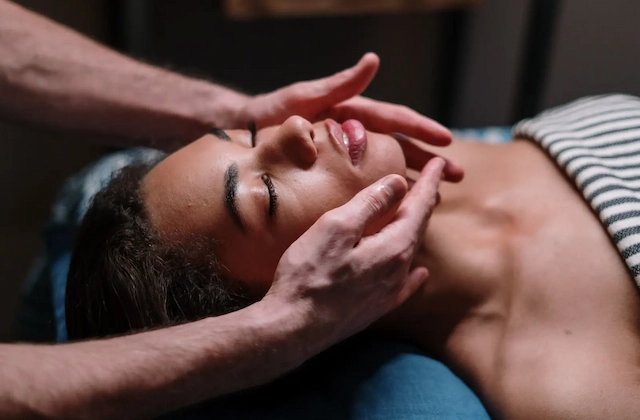
Depending on the findings, guided jaw exercises, stretches and manual techniques can help reduce pain and improve function. We adapt these measures to your symptoms. Active exercises and certain manual techniques are particularly recommended for persistent CMD pain.[4]
Support for everyday life, too.
You receive clear information and suitable exercises to do at home. Together, we discuss how to notice and change habits that put strain on your jaw, such as frequent clenching. Depending on the findings, additional dental, medical or psychotherapeutic care may also be helpful.[1, 3]
Sources & clinical background
- DGFDT and participating professional societies: Therapy for craniomandibular dysfunction (2022). Scientific statement on examination, advice, self-directed exercises and treatment.
- NIDCR: TMD – patient information. Symptoms, contributing factors and the significance of painless joint sounds.
- AADOCR: Position Statement on TMD (2026). Individualised, conservative treatment and interdisciplinary care.
- Busse et al.: BMJ treatment guideline (2023). The recommendations apply to CMD pain lasting at least three months; they cannot be generalised to every case of CMD.
- gesund.bund.de: Remedies – health insurance coverage. Background information on statutory co-payments.
- PKV service portal: Remedies for privately insured patients. Background information on reimbursement depending on the insurance policy.
- Osteopathieschule Oldenburg: foundation and advanced CMD courses. Description of the completed training: examination and treatment of the jaw, self-directed exercises, surrounding structures and interdisciplinary collaboration. This information relates to these courses.
Our approach to CMD care.
For your treatment, we combine focused training in jaw care with regular exchanges across professional disciplines.
Focused further training.
Focused training in jaw care forms an important foundation of our CMD treatment. This includes examining and treating the jaw region, as well as suitable exercises for your everyday life.
Keeping the connections in view.
We consider the jaw together with the surrounding muscles and cervical spine. We also look at habits that can put strain on the jaw, such as frequent clenching or grinding.
Sharing professional knowledge.
We regularly exchange knowledge with dentists and orthodontists. This brings together our physiotherapy perspective and the expertise of other disciplines.